




Reputation is a delicate thing. You can spend years trying to build a good image for your brand but it can all go away in one viral social media post. So as much as possible, you only want good traits associated with your brand – unless you can’t help it.

The GWM Cannon has a distinct persona thanks to its Google Maps-looking logo at the grille. With the plethora of cars I am testing, my wife usually jumbles her experience with the car I drove. I didn’t expect her to instantly recognize this one.
“Di ba yan yung matagtag?”


Her experience with the Cannon’s previous iteration was memorable for not so good reasons. Will that change with this new version? GWM promised a new powertrain and a re-tuned suspension – something that my wife will certainly appreciate if true. Let’s see if this new Cannon Lux 4×4 can change her mind.
The latest GWM Cannon appears to have taken a more restrained approach to its appearance, shedding some of its chrome in favor of darker accents dominating the exterior. The grille, however, retains a prominent GWM emblem, which I particularly like.


The more significant transformation happened inside, where the Cannon has finally moved away from its dated dashboard aesthetic. In its place is a contemporary layout that looks more capable of competing with established rivals such as the Ford Ranger and Nissan Navara. There’s a sizable digital instrument cluster, redesigned steering wheel, soft-touch controls infront of the infotainment screen, and a futuristic, almost Gundam-inspired gear selector giving the cabin a distinctly modern character. The center console is also more intuitive, while brushed aluminum accents add a welcome touch of sophistication.
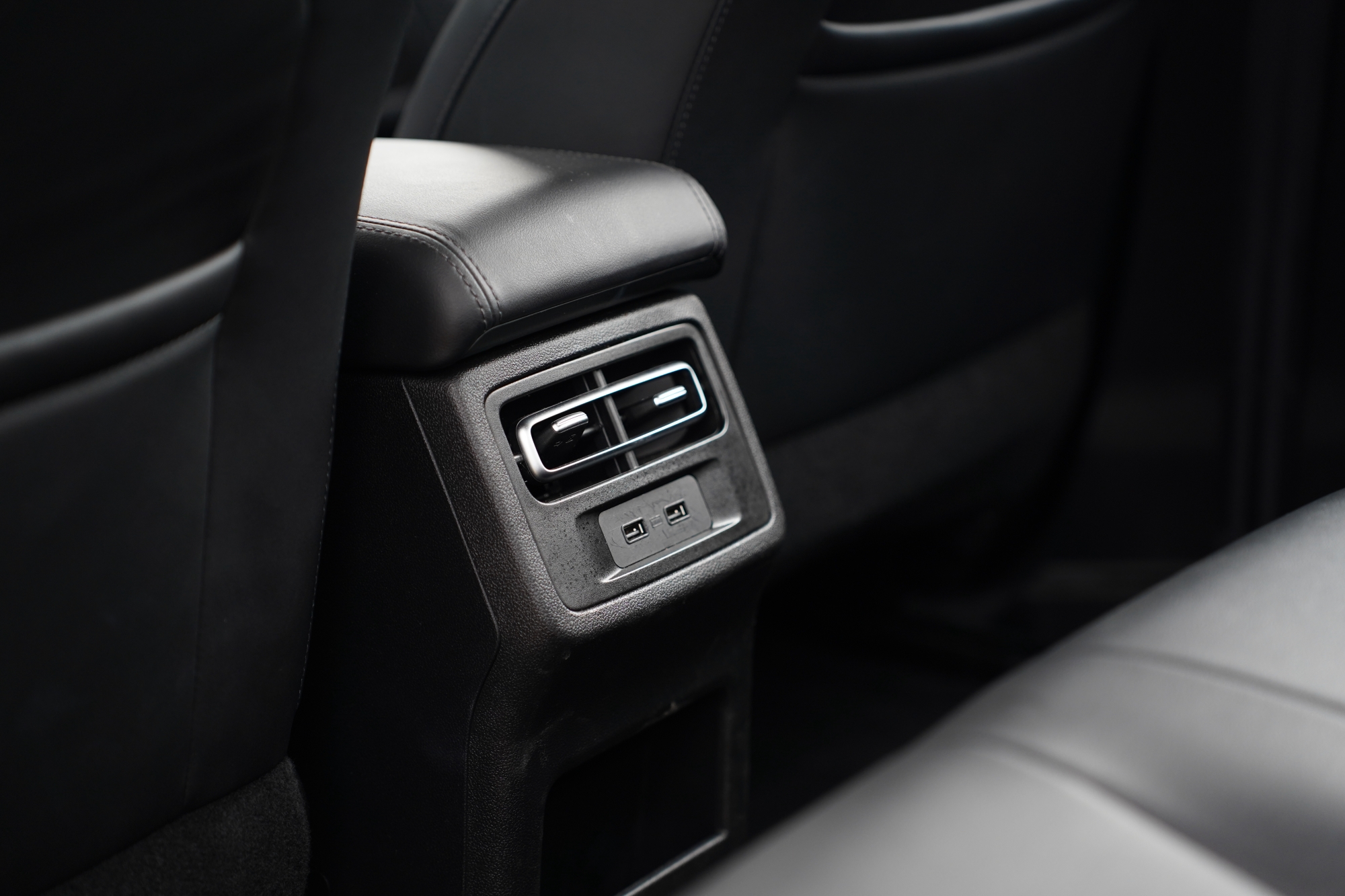
This visual overhaul comes with a considerable improvement in amenities. Automatic Climate Control, a 50W wireless charger, USB Type-C connectivity, Wireless Apple CarPlay and Android Auto, and Rear Air Vents are among the conveniences now available. These appointments bring the Cannon up to contemporary standards, addressing one of the more noticeable shortcomings of its predecessor.


But while the improvements are immediately apparent in the cabin, the more important question is whether they translate into a better driving experience.
On paper, the changes are promising. The previous 2.0-liter diesel engine has been replaced by a larger 2.4-liter unit producing 184 horsepower and 480 Nm of torque. Thankfully, the additional displacement and power haven’t come at the expense of fuel efficiency.
During my city drive, the Cannon returned 11.7 km/l, a substantial improvement over the 6.7 km/l I recorded with the previous iteration. Highway consumption was equally impressive at 18.5 km/l, significantly better than its predecessor’s 11.5 km/l and even exceeding the roughly 15 km/l benchmark for midsize pickups. Unfortunately, the same cannot be said about the suspension.

Despite claims of revised tuning, the Cannon continues to exhibit the same unsettled ride quality that haunted the previous iteration. With just two occupants, the Cannon can become tiresome, and even filling the cabin with passengers does little to improve matters unless everyone brings considerable weight to the equation. As before, the suspension only begins to settle into a more agreeable feel once there’s a hefty load in the cargo bed.
The experience becomes somewhat more forgiving once you’re behind the wheel. Although the ride remains unchanged, other improvements offset its shortcomings. Steering effort is noticeably lighter than before, making the Cannon easier to maneuver through narrow streets and confined spaces. It also gains a reassuring amount of weight at higher speeds, lending greater confidence during highway driving.
Refinement has also taken a step forward. The cabin is quiet, with diesel engine noise kept to a more acceptable level. Even the unbranded audio system delivers a surprisingly satisfying listening experience, adding another layer of comfort to an otherwise utilitarian machine.

Not every aspect of the driving experience has received the same attention. The automatic brake hold remains rather abrupt in operation, although its inclusion is still appreciated. Advanced driver assistance systems are also absent from this particular variant, leaving drivers with conventional Cruise Control and a Tire Pressure Monitoring System. Camera resolution could likewise use an upgrade, although GWM deserves some credit for providing a blind-spot camera mounted on the right-side mirror.
These shortcomings reveal where the Cannon’s development priorities lie. Rather than attempting to address every weakness, GWM appears to have concentrated on improving the qualities that matter most to its intended audience: utility, efficiency, and everyday convenience.

Rising diesel prices may have dampened the appeal of pickups among some buyers, but these vehicles remain indispensable in environments where transporting heavy cargo is part of daily life. With a payload capacity of 1,050 kilograms, the Cannon retains the capability expected of a proper workhorse. Perhaps that is where this latest iteration makes its strongest case.
Priced at PHP 1,578,000, the GWM Cannon Lux 4×4 is no longer simply an affordable four-wheel-drive pickup with an impressive hauling capacity. It now offers a collection of conveniences that make the working day considerably more pleasant, challenging the long-standing notion that utility-oriented vehicles must be basic and devoid of refinement. The improvements haven’t made it a perfect all-rounder, but they have given the vehicle a clearer sense of purpose. Rather than continuing to position itself as a family vehicle that happens to have a cargo bed, the GWM Cannon seems to have embraced its identity as a hardworking pickup that happens to be better equipped.